
Author: admin

  • Climate change: key considerations for general insurers

    Australia and New Zealand have just faced another summer dominated by extreme weather events – a taste of what’s to come with a changing climate. At the same time as grappling with the immediate response to the summer’s events, insurers are also having to take a more forward-looking approach to understanding and responding to climate risk. In this article, we explore some of the key climate-related issues front of mind for Australian and New Zealand general insurers.

    Rising claim costs and reduced insurance access and affordability

    Worldwide, climate change is already increasing the risk of extreme weather events, though impacts vary by region and by type of peril. In February 2022, the Intergovernmental Panel on Climate Change (IPCC) released its alarming Sixth Assessment Report, a “dire warning” that climate change is a “grave and mounting threat to our wellbeing and a healthy planet”. In emphasising the urgent need to adapt to a warming Earth, the IPCC explains that a certain amount of climate change is ‘baked in’, so even if we immediately reduce emissions significantly (which isn’t happening), significant climate impacts will still take place.

    Climate change has, and will continue to, increase the frequency and severity of catastrophic losses in future, placing pressure on premium rates, and on insurance access and affordability in some market segments. New South Wales, in particular, has suffered through the 2021 floods, then the even worse and more extensive 2022 flood events. As the climate warms, heavy rainfall events are expected to become more intense, causing increased potential for flooding. Solutions that reduce loss of lives, livelihoods and property in a flood-prone future are complex and involve multiple parties. These include local, state and Commonwealth governments, as well as insurers, banks, builders, developers and communities. Insurance is a vital part of the solution. For example, insurance pricing, terms and conditions can provide incentives for the construction of more safely situated and resilient buildings.

    One response of the government to this issue in Australia has been the introduction of a reinsurance pool for cyclones and related flood damage, which began operations on 1 July 2022. The pool is aimed at reducing the cost of home insurance for households in cyclone-prone parts of the country.

    Insurance affordability for flood-prone areas was also on the mind of the New Zealand government well in advance of the recent events in the North Island, with New Zealand’s first national climate adaptation plan released in August 2022 listing “develop options for home flood insurance” as a key action to address inequity. This action notes that work is underway to determine the impact of risk-based pricing on insurance and explore options to support access to and affordability of flood insurance. Possible options range from doing nothing through to some form of government action, as in Australia, the UK and other countries.

    Climate risk management, adaptation and mitigation will be increasingly critical for insurers, customers and regulators into the future. This is likely to require a forward-looking approach, new capabilities and a broader range of partnerships.
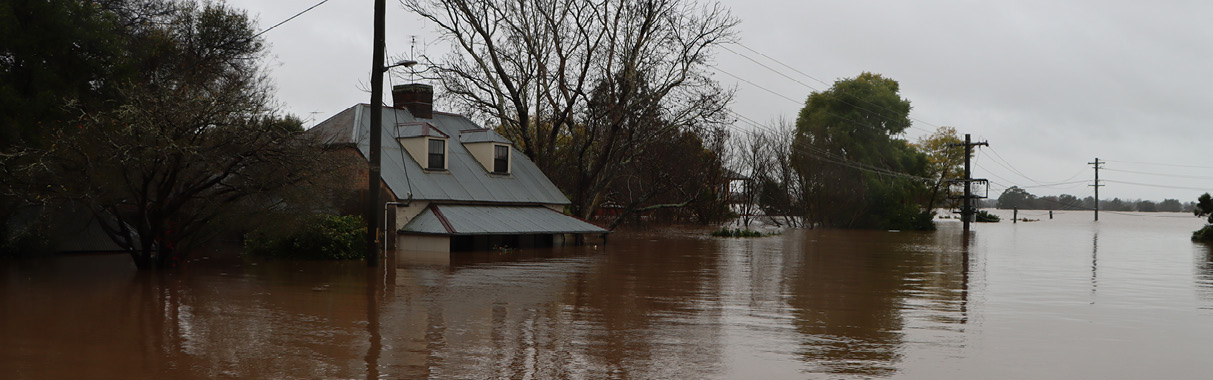
    This flooded house at Windsor, Western Sydney, was a typical scene across NSW during the 2022 floods

    Standardised disclosure of climate risks

    With growing risk of climate related risks comes a growing global momentum toward standardised disclosure. The Task Force on Climate-related Financial Disclosures (TCFD) issued voluntary guidelines that 2,600 companies around the world endorsed in 2021. The recently created International Sustainability Standards Board has also released draft International Financial Reporting Standards on Climate-related Disclosures, which builds on the recommendations of the TCFD. The message for insurers is that investors and regulators will expect increasing maturity and quality of disclosures.

    In New Zealand climate related disclosures are now mandatory for accounting periods that start on or after 1 January 2023 for:

    • Large, listed companies with a market capitalisation of more than $60 million
    • Large-licensed insurers (with greater than $1 billion in total assets under management or annual gross premium income greater than $250 million)
    • Registered banks, credit unions, building societies and managers of investment schemes with more than $1 billion in assets and some Crown financial institutions.

    Given the global momentum towards standardised closures, smaller NZ insurers should get on the front foot and start thinking about how to identify, quantify and report on their climate-related risks.

    In December 2022,  the Australian Treasury released a consultation paper on Climate-related financial disclosures, which commits to introducing standardised, internationally-aligned reporting requirements for Australian businesses to make disclosures. The consultation paper proposes that large financial institutions – including insurers – should be the first cabs off the rank for mandatory disclosure requirements. The consultation period closed in February, and insurers will be keeping a keen eye on what size thresholds will be put in place to determine this initial requirement. Next steps involve further consultation on a specific design proposal which will provide more detail of the new reporting requirements, their implementation and sequencing.

    Australian insurers of all sizes should be preparing for eventual mandatory disclosures, building off the considerations they have made applying APRA’s Prudential Practice Guide CPG 299 – Climate Change Financial Risks which reflects the TCFD’s framework for considering and managing climate risks.

    A move towards net zero

    While climate-related disclosures focus on the risk that climate change poses to a business’s operations and profitability – companies, investors, regulators and other stakeholders are also looking to understand the direct impact a company’s operations and products have on the climate and environment.

    Joining the global momentum towards insurers making net-zero emissions targets, in November 2022, the Insurance Council of Australia released its Climate Change Roadmap Towards a Net-Zero and Resilient Future. This roadmap reflects the commitment of the Australian general insurance sector to achieving net-zero by 2050, and provides guidance for the Insurance Council members on the role they can play in the decarbonisation of the Australian economy.

    Further, at least 39 major insurance companies have adopted policies to no longer insure new coal projects and, in many cases, to phase out their cover for existing coal operations. In a similar way, net-zero commitments are likely to continue to impact underwriting standards in future, particularly for high-emissions industries, such as transport and agriculture.

    Opportunities for innovation

    As economies transition towards lower emissions, opportunities will emerge for industries that can demonstrate more emissions-efficient systems, or even carbon neutrality. Leading insurers will be on the lookout for ways in which they can develop new products and services, access new markets and build resilience along their supply chain. Examples already exist of banks and insurers offering better rates to businesses with lower emissions relative to their sector peers – partly because these companies are deemed better risks. An Australian insurer, for example, currently offers a low emissions car discount, where customers can save up to 25% off comprehensive car insurance if their car is recognised as having low emissions.

    How can Taylor Fry help

    With more than 20 years’ experience partnering with the insurance industry, and a team of climate risk specialists, Taylor Fry can help insurers think strategically about their response to climate change. For more information on the services we offer, visit our Climate and Sustainability page.

  • Gender bias in AI and ML – balancing the narrative

    In support of this year’s International Women’s Day theme Cracking the Code: Innovation for a gender equal future, statistics expert and Taylor Fry Director Gráinne McGuire looks at the issues impacting gender parity in this age of digital transformation. Driven by her passion and advocacy towards the ethical use of machine learning (ML), Gráinne explores the inherent gender bias in artificial intelligence (AI) and what can be done to close the gender gap.

    “Man is to computer programmer as woman is to homemaker?”. So opens a paper I came across recently. It seems to me to perfectly encapsulate the problems with gender and AI. Not that there’s anything wrong with either job – what’s wrong is the gendered association. Combine that with AI and ML being increasingly applied at scale and in a position to not only predict the future, but also create the future and reinforce biases, and we’re into Cathy O’Neil’s Weapons of Math Destruction territory.

    If data is biased, AI and ML tools amplify the biased patterns, such as woman = nurse

    We know we’ve got problems with AI and gender. AI relies on lots and lots of data. This data comes from our lived experiences and our world is biased. And AI isn’t really all that smart – it just pretends to be by being really good at finding patterns in data and using those to infer or predict things about the world. And therein lies the problem – AI suffers from bias amplification. You feed in biased data and – no surprise – the AI or ML tool finds the patterns and comes up with man = doctor, woman = nurse. Or the one above, which isn’t necessarily all that accurate.  Women were prominent in the early days of computer programming after all – with the likes of Ada Lovelace, often regarded as the first computer programmer, and American computer scientist and mathematician Grace Hopper paving the way – until men realised it was cool and important.

    Those in the know might point out that I’m referring to embedding models above and in many ways they are the larvae to ChatGPT’s butterfly (related, but utterly different and so much upstaged by ChatGPT), but ChatGPT can fall prey to the same thing (although the ChatGPT creators do appear to have deeply considered gender bias – still, it’s hard to catch everything).

    Real-life examples of gender bias in AI

    Profession gendering

    In a recent article for Fast Company, Textio cofounder Kieran Snyder asked ChatGPT to write feedback for someone in a particular job with no gender specified. Often the feedback was gender neutral but stick nurse or kindergarten teacher into the mix, or mechanic and construction worker and the she’s and he’s start to appear. You can probably guess which jobs got which pronouns. But at least doctors were always ‘they’ in their tests, so that’s something.

    Racial bias – even famous people are not immune

    Of course, it’s not just language models that suffer from bias and specifically bias against women. We see it in facial recognition software, particularly if you’re a black woman. MIT graduate, Joy Buolamwini’s research paper uncovered large gender and racial bias in automated facial analysis algorithms. Given the task of guessing the gender of a face, the systems performed substantially better on male faces than female faces, with error rates of no more than 1% for lighter-skinned men, compared with error rates of up to 34.7% for darker-skinned females. She called this phenomenon the ‘coded haze’, in which AI systems failed to correctly classify the faces even of iconic women like Oprah Winfrey, Michelle Obama and Serena Williams.

    The’ tech bro’ age

    And coming back to where we started, man is to computer programmer? Well, that’s a contributing factor to the problem. We’ve all seen pictures of the tech bros. Even those of us not in tech but using AI/ML tools in other areas often find ourselves in workplaces that have more men than women. And when people are designing algorithms and thinking about their impacts, with the best will in the world, it’s hard to be a good advocate for someone whose experience of life is very different to yours.

    Bias in facial recognition has seen algorithms fail to classify iconic women like Michelle Obama

    A matter of life and death – why we must act now

    Quite literally, this bias is killing people. Medical data, I’m looking at you. A lot of medical trials are carried out on men only because – you know – women have these awkward hormonal cycles that mess with the results. So, let’s do it on men only and get nice clean results. But, those very same hormones might mean the medicine works differently in women, or their symptoms might be different. Feed that inadequate data into an ML algorithm and the bias goes round and round. Women get inadequate health care or die.

    Invisible women – when prejudice is magnified

    This problem was explored in depth by best-selling author Caroline Criado Perez, who spent years investigating the gender data gap, and wrote the award-winning book Invisible Women. In her new podcast series, Visible women, Caroline uncovered that AI might be making healthcare worse for women because it magnifies the pre-existing bias and data gap caused by overrepresentation of men in cardiovascular research. In fact, according to research funded by the British Heart Foundation, more than 8,000 women died between 2002 and 2013 in England and Wales because they did not receive the same standard of care as men.

    The ‘strong’ vs ‘bossy’ lens

    In a wide-ranging interview with Jacqueline Nolis, a data scientist, I was struck by Nolis’s experiences with performance reviews as a transgender woman before and after transitioning. A well-established data scientist, her reviews went from being described as being “so good at always saying the truth … even in hard situations” and “thank goodness … always speaking out” to – following a job change after her transition – receiving for the first time in her life reviews like “difficult to work with”, “doesn’t know how to speak to other people”, “needs to learn … when to not say stuff”. Is it any surprise we’re losing women from the AI/ML pipeline when many of them face everyday sexism?

    Busting myths one hurdle at a time

    And that’s even assuming they get into the pipeline in the first place. They have to get past the hurdle of studying a STEM field in university, where many women come from a society that says “women just aren’t as good at maths and sciences as men”. This even became a controversial political issue in England in 2022 when the Chair of the Social Mobility Commission discussed why fewer girls take A-level physics, saying “they don’t like it, there’s a lot of hard maths in there that I think they would rather not do”. While not everyone shares that view (the Children’s Commissioner for England countered that it was more to do with the lack of female role models in STEM), it does show that this view is endemic in many societies.

    AI might be making healthcare worse for women … More than 8,000 women died between 2002 and 2013 in England and Wales because they did not receive the same standard of care as men.

    What can be done to close the gap?

    This is hard – let’s not minimise it. But hard is not an excuse for doing nothing.

    Tackle ethics together

    Ethical data standards are a place to start and there are many of these around, but they all (unsurprisingly) share common themes – recognise and manage bias, be fair, consult with those impacted by their use, consider privacy and human rights. However, it’s important to acknowledge the problem with many of these standards is that they don’t tell you how to deal with these issues.

    This point was demonstrated in feedback we received in our one-year review of the NZ algorithm charter (a “commitment by government agencies to manage their use of algorithms in a fair, ethical and transparent way”). Some of the feedback included that not all agencies had sufficient experience in measuring bias or applying human oversight, and they’d appreciate a community of practice to support compliance with the Charter as a whole. So we need to learn from one another.

    Focus on fairness

    There’s much discussion around the concept of fairness out there. But fairness is a complicated problem, with many possible and conflicting definitions. I’ve discussed fairness in the past, so I won’t repeat it here (but if you check out the article, you’ll find an example of gender bias in Swedish snowploughing, as well as a discussion around some issues of fairness).

    If you’re building a model with significant personal impacts, then you may want to consider building an interpretable model, as per another article of mine on the topic. Long story short, if you’re looking to deal with biases, then working with interpretable models can make this a lot easier, since you at least understand why your model makes the predictions that it does.

    Proactive perspective in the workplace

    Consider your staff and get a diverse range of people into the room working on these algorithms, which in turn gives you a diverse range of views on the possible consequences of using them. I’ve observed that the outspoken people on topics of fairness, bias and impact of AI are often women – Cathy O’Neil, Timnit Gebru, Cynthia Rudin, Caroline Criado Perez to name a few. Is this a coincidence?

    The thing is, gender isn’t a minority group, women and men are approximately equal in number. And if AI is biasing against close to half the population, that’s a huge problem we need to solve.

    Understand that self-promotion can be nuanced

    I’m not an HR person so it’s a bit outside my area of expertise to suggest how to do this, but there are some commonsense things we can do – like recognising that, overall, women are more likely to underestimate their abilities, men to overestimate. Or that people may come from cultures where self-promotion may be frowned upon. When making hiring or promotion decisions, we should take that into account.

    Encourage more women in STEM

    Finally (in the sense of this article, not in the sense of solutions to the bias problem!), we’ve also got to get more women into the STEM pipeline – more girls doing STEM subjects at school and university. Again, this is a huge subject in its own right, so I won’t go into details here. But I will note that one of the articles I referenced earlier, discusses recent research by the authors which found that external feedback on mathematical abilities had a significant impact on the likelihood of girls pursuing a maths-requiring STEM degree.

    Crucial flow-on effects of fixing gender bias

    Let me finish by acknowledging that gender isn’t the only thing AI has a bias problem with. Personally, being a cisgender white female puts me in a far better place than many others find themselves. Minority groups in general suffer, some more than others. But we shouldn’t fall prey to whataboutism and use that as an excuse not to fix gender bias because other groups have it worse. What’s more, a large proportion of those other groups who have it worse will be women anyway, so fixing gender bias may just help them out a little bit, too.

    The thing is, gender isn’t a minority group, women and men are approximately equal in number. And if AI is biasing against close to half the population, that’s a huge problem we need to solve.

  • Disability Royal Commission releases Taylor Fry’s report on the economic cost of violence, abuse, neglect and exploitation

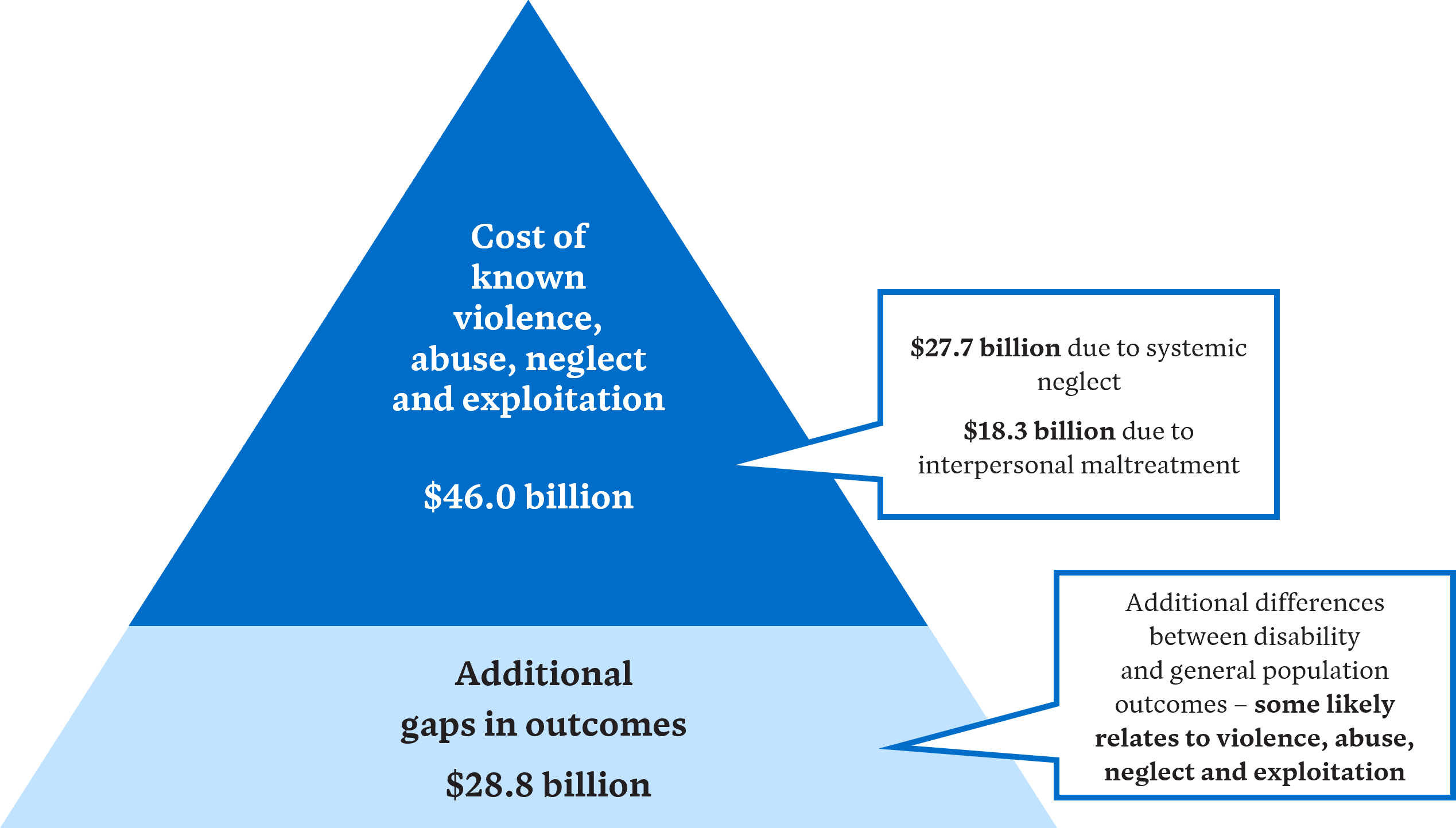
    Systemic failures and maltreatment experienced by people with a disability in Australia is estimated at $46 billion annually, or $9,600 on average per person with a disability. These are among the key findings of recently published research undertaken by Taylor Fry in collaboration with The Centre for International Economics.

    The report, commissioned by the Disability Royal Commission, underscores the need for urgent action to address the many cases of violence, abuse, neglect and exploitation identified by the Royal Commission through its inquiry. It aims to contribute to a growing awareness across government and in the community of the costs of maltreatment of people with disability and the societal inequities they face daily.

    With 4.8 million people living with disability in Australia (19% of the total population), and half of this figure over the age of 65, we hope our work will assist decision-makers and policy-makers in determining allocation of resources across areas of governmental intervention to address the issue.

    Half of the 4.8 million people living with disability in Australia are over the age of 65

    How we estimate the economic costs

    Using actuarial and econometric modelling to estimate the cost, Taylor Fry and The CIE calculate the expenditure that would be avoided if violence, abuse, neglect and exploitation ceased. This is based on statistics available for the years 2021 to 2022 and take into account:

    • Systemic failures and neglect ($27.7 billion) – This includes failure by government, business and other systems to provide equal opportunity to participate in the economy and equal access to quality services. Costs include loss in labour force productivity and costs associated with lack of accessible housing.
    • Interpersonal maltreatment perpetrated by individuals ($18.3 billion) – Costs include additional hospital stays due to maltreatment and reduced quality of life.

    Key findings – Cost, experience and gaps in outcomes

    • The cost of violence, abuse, neglect and exploitation that can be reliably measured is $46 billion in 2021-22
    • 60% of people living with disability experienced maltreatment perpetrated by an adult
    • 28% of children with disability experienced significant child peer bullying in their lifetime
    • The average cost of violence, abuse, neglect and exploitation per person is double for First Nations people
    • The cost of interpersonal maltreatment is higher for women than men, while the cost of systemic failures is higher for men.

    Gaps in outcomes, which are indicative costs from other forms of over-representation in poor-outcome areas and under-representation in financial and social opportunities are valued at $28.8 billion in 2021-22. Specifically, these include:

    • Finding it more difficult to secure employment when a person with disability rates themselves as ‘able to work’
    • Poor health outcomes from higher rates of obesity, lower rates of physical activity and higher blood pressure compared to other Australians
    • Higher rates of homelessness, involvement with the justice system and loneliness.

    We hope our findings will assist decision-makers to allocate resources and inform interventions

    The report also states that costs would likely be higher if more data was available. Substantial savings can be made over time if governments and society are successful in addressing maltreatment, including issues of systemic failure and neglect.

  • A life in the career of an actuary

    Finding your way in any profession can be filled with adventure, challenge and plenty of life lessons – while figuring out the right mix of passion and purpose is perhaps the biggest skill of all. For actuary Anh Vu, balance is key, as she charts a path to bring the best of academia and industry together for mutual benefit and meaningful change in people’s lives. She takes us on her journey of actuarial discovery.

    As an undergrad, I often wondered what I’d do when I became an actuary. Mostly, I imagined solving financial problems in an insurance company or a bank. Like many actuaries, I’ve always had a passion for maths, business and economics. At the very least, I hoped the distributions and mathematical models I managed to memorise for exams would one day be useful in my future job.

    I wasn’t wrong, but I definitely underestimated the potential!

    Anh shares her journey and learnings across both traditional and non-traditional actuarial paths

    Free-style innovation

    After my commerce degree and honours in actuarial studies, I was keen to stay in academia and continue with a PhD. I enjoyed research and the idea of generating innovation completely free style – where you pick topics you love and take ownership of your work – and the flexible hours appealed to me as well. I chose a joint program in actuarial studies at UNSW and applied mathematics at Universite de Montreal, which meant living in Canada for a whole year.

    My academic journey helped me learn that being able to understand and think critically is vital towards developing a diverse skillset as an actuary. For example, I explored advanced modelling techniques that had applications in robotics engineering to solve actuarial problems. The work was inspiring and made me realise we don’t need to be restricted by what we’re taught in university when we’re choosing statistical and mathematical tools. I’ll never forget the experience.

    Theory meets practice

    By the end of my PhD, I was ready for a new challenge. Research was on the theoretical side, and I wanted to know the practical side of the profession. It struck me that there’s often a gap between the theory and what happens in real life, and I wanted to help close that gap. It made sense to me that academia and industry could benefit more from each other. These days, I’m happy to be working in a consulting environment. The work is project based, so it has given me plenty of opportunity to immerse myself in a variety of projects and apply the theory to solve real-world problems in different areas. I never get bored!

    Finding meaning

    It helps that I’m part of a team with a reputation for pioneering work in the government sector, using actuarial techniques to support policy design and improve people’s lives. It’s fascinating but also meaningful. Luckily, we’re able to work flexible hours, which was something I appreciated through my PhD and was keen to continue in my job to support wellbeing, and maintain a healthy balance of passion and perspective.

    Pathways to better outcomes

    In my working life so far, I’ve had a taste of the traditional and non-traditional actuarial paths. The traditional path involved helping insurers with their pricing and liability valuations. The non-traditional path was using advanced modelling techniques to support government in making data-informed decisions and improve social outcomes.

    Through these roles, I’ve learned many important lessons and there have been lots of highlights.

    When it all makes sense

    In the traditional environment, it became clear that actuarial work is a lot more than just applying some statistical formulas – it’s about making sense of the numbers and methods you use with the business context firmly in your mind. Doing technical work is important, but it’s equally important to be able to communicate your technical work and results to different stakeholders – especially those decision makers who may not deeply understand the technical elements and want to know the impact for their business in straightforward terms.

    It was also handy to have work experience in the traditional areas as I was studying for my actuarial fellowship with the Actuaries Institute – and it definitely helped me pass the exams!

    Sometimes, I think actuaries are like superheroes and our actuarial skillset is our superpower

    A versatile, evolving skillset

    The non-traditional work in the government sector showed me the versatility and evolving nature of the actuarial skillset – the learning never stops! I’ve always been surprised by how much I can do with it, too. It’s extremely rewarding to know that I can use my actuarial skillset towards meaningful change in people’s lives.

    Not all superheroes have capes

    Sometimes, I think actuaries are like superheroes and our actuarial skillset is our superpower in the way we can contribute to social good. The range of areas our work applies and can make a difference is so diverse as well, from banking to government, marketing, climate change, and many more.

    And when our capes come off? Equally important in the life of an actuary is the fun and social aspect of our profession. I’m fortunate to have been surrounded throughout my career by like-minded and compassionate people who inspire me – which has always made and I’m sure will continue to make the journey truly enjoyable.

  • Game on – winning formula for an actuarial Excel whizz

    By day, Taylor Fry Director Andrew Ngai is hard at work for his clients. By night, his knack for numbers often plays out very differently. We caught up with him to hear how his passion for spreadsheets became a surprising TV sporting sensation and what it takes to be an Excel gaming champ.

    You recently won the Microsoft Excel World Championship (MEWC) – how did you first become interested and what appeals to you most about taking part?

    Excel is part of my day-to-day work as an actuary and I thought I’d have fun with it when a few years ago I discovered a competition called the ModelOff Financial Modelling World Championships. From there, I found out about MEWC and was keen to enter for its non-financial focus. I find these kinds of problems particularly enjoyable to solve – the scenarios are imaginative and there’s lots of opportunity to think creatively. It’s also been nice to meet fellow Excel enthusiasts from all over the world through these competitions.

    King-size success: Andrew adds the MEWC crown to his All-Star Battle win earlier this year

    How can you top this performance next year? Any special rival you’re watching out for?

    I’ll have my work cut out for me! There are so many excellent Excel modellers involved and the competition is bound to become fiercer as more people find out about it, especially with the huge media coverage and viral response to the Excel Esports All-Star Battle I won earlier in the year. Quite a few of the players have also been competing in other financial modelling competitions for years, sharpening their skills. As for a special rival, I’d say Diarmuid Early – he’s really fast at problem solving and has deep Excel knowledge. We faced off in the All-Star Battle, and although I managed to edge him out in the final, he finished the semi-final question a lot faster than I did.

    How did you react when you first discovered the competitions would be broadcast on ESPN – the world’s leading sports entertainment broadcaster, with an average day-viewership of 812,000 people? Who did you imagine your audience would be?

    It caught me by surprise – I never imagined I’d be on TV, let alone for an Excel competition. I don’t think it sunk in until after the broadcast of the All-Star Battle. With all the publicity that received, I ended up being interviewed on Channel 7’s Sunrise program. Breakfast television definitely wasn’t part of the original career plan!

    For MEWC, the organisers put a lot of effort into making the competition interesting for a broader audience, and Excel is a software that most people will have on their computers even if they don’t use it much. So in terms of the audience, while I suspected it would appeal mostly to people familiar with Excel in their day jobs, I thought it would also attract some other curious spectators.

    With all the publicity … I ended up being interviewed on Channel 7’s Sunrise program. Breakfast television definitely wasn’t part of the original career plan!

    How relevant are the Excel skills you need for the competition to your day job?

    The skills overlap a lot, and I think it goes both ways – my day job helping me in the competition and vice versa. For example, I started using more dynamic arrays in the competition, which help perform some tasks much more efficiently (e.g. sorting or filtering for unique values), and brought those over to some of my work. Conversely, I’ve been using formulae like INDEX and MATCH for many years, for example to efficiently look up values within tables of data. These are also core to solving many MEWC or financial modelling problems.

    How was the experience for you this time with the live broadcast? Did it affect your focus?

    The live broadcast does make me feel a bit more pressure knowing people are watching, especially this year, going in as one of the favourites to win. Luckily, I managed to focus reasonably well once we started solving the problems. It helped to get a few minutes of reading and thinking time before the timer started.

    How did you feel the moment you won?

    I was delighted, but also exhausted after two hours of intense problem solving in the middle of the night! With the competition becoming stronger, I was happy to defend my title this year. I was also thankful for some good fortune along the way, especially in the semi-finals when I made a last-minute lucky guess to just beat my opponent’s score.

    Peak performance: Andrew defended his 2021 MEWC title with a mix of focused prep and a little luck

    How do you prepare to stay in mental and physical shape?

    For me, staying in mental shape is a balance between practising past problems but also not solving so many that I tire of it all and burn out. Physically, it was about doing what I can to be as awake as possible at 4am. A shower before the competition started was a must!

    How do you juggle work and the competition? How much sleep do you manage over the duration?

    I guess it helps that my work involves Excel a lot, so in that sense doing work is also helping me to prepare. In the week leading up to the finals, I sacrificed a bit of my social life (willingly!) and spent most of my nights doing or reviewing past problems. Sleep was mainly a challenge on the last night, with the finals being held at 4am in my time zone – I can’t say I had quality sleep the night before.

    Is it a young person’s game or can you see yourself still competing years from now?

    While younger people may be a bit quicker with using the keyboard and mouse, being successful in the competition is more about having powerful problem-solving skills, and there are plenty of strong participants who are older than me.

    What helps you perform at your best?

    Training and preparation help me a lot, including familiarising myself with the types of problems I’ll likely encounter. I’m able to concentrate pretty well once I get started and I make sure there are no distractions. Ample reading time to understand the question is important, too. Some questions involve more complicated games where it takes longer to understand the rules. I usually struggle with those and rush into building the solution too quickly because I haven’t had the time to think about the solution.

    How do your friends and family view your participation in the competition?

    My friends and family are all very supportive and encouraging. I know my parents watched the whole thing live, but most others only watched afterwards given it was well before dawn our time!

  • RADAR New Zealand Snapshot

    The past year has presented plenty of challenge for the New Zealand insurance sector, with events unbound by global borders shaping the landscape. Climate change, rising inflation and cyber perils are among the top priorities around the world and impacting insurers locally.

    Download our report

    to discover the effects of what’s been and how to prepare for what lies ahead

    In RADAR New Zealand Snapshot, we use the latest data and our market expertise to shed light on the New Zealand general insurance landscape, and assess the patterns, drivers and emerging trends across the industry. Our overview highlights key market movements and explains what they mean for insurers, from the impacts of a global rise in natural disasters and inflation to climate adaptation, regulatory change and cyber risk.

    Underpinned by ICNZ and RBNZ figures, as well as research by The Task Force on Climate-related Financial Disclosures and recent Actuaries Institute green paper, we offer insurance insights to help decision-makers build resilience and sustainability for Aotearoa into 2023 and beyond.

  • Accuracy and causality the hot topics in data science at SIGKDD 2022

    The international data science community gathered recently in Washington DC for the first in-person conference of its kind since 2019, sharing insights on knowledge discovery and data mining. Taylor Fry’s Tom Moulder was there for the 28th Association for Computing Machinery SIGKDD event, and reveals two big themes – why model accuracy is no longer enough and the growing embrace of causal relationships.

    KDD styles itself as the world’s top interdisciplinary data science conference. It’s a fair assessment, given KDD has introduced some of the most influential developments in machine learning (ML) – for example, the now ubiquitous XGBoost algorithm.

    This year featured speakers from Google, DeepMind, Amazon, DARPA, Microsoft, Meta, LinkedIn and the world’s top universities. Talks spanned a range of applications, including recommender systems, social networks, health, autonomous vehicles, finance, social impact and ecommerce.

    Despite this breadth, there were a couple of key challenges that featured consistently:

    • Beyond accuracy – How can we build ML applications that are not just accurate, but also fair, unbiased, robust, privacy preserving and transparent?
    • Capturing causality – How can we build models to understand causal relationships, and empower us to analyse the best decisions to make, rather than just predict outcomes based on history?

    Causation analysis has relied on randomised experiments, often wildly expensive or impossible to run

    Finding value beyond accuracy

    As the ML field matures, models are increasingly required to be more than just accurate. They should also be transparent, explainable, fair, privacy preserving and robust to exploitation.

    This is echoed in 2021 comments from European Commission Executive Vice President Margrethe Vestager, concerning European Union rules on artificial intelligence: “… trust is a must, not a nice-to-have”.

    These challenges have been a focus of ML researchers and practitioners in recent years, appearing in KDD talks and workshops across almost every application and industry. The issues are particularly relevant for actuaries in our approaches to modelling and problem solving.

    The argument for a human-centric approach

    At the conference, Krishnaram Kenthapadi (Fiddler AI), Hima Lakkaraju (Harvard), Pradeep Natarajan (Amazon), and Mehrnoosh Sameki (Microsoft) presented a workshop on model monitoring, in a world where achieving model accuracy is no longer enough – rather, it’s just one of numerous considerations with potentially serious consequences. They make the case that continuous monitoring is critically important, and should involve evaluating biases, (un)fairness and model robustness rigorously. They argue for ‘human-centric’ modelling, whereby monitoring provides analyses to guide model review, while preserving human decision-making around questions such as when to review and update models.

    Tackling bias

    A full day workshop on Responsible Recommendations continued this theme, raising issues such as fairness in algorithms recommending job applicants for open positions. James Caverlee (Texas A&M) discussed the risk of ‘mainstream bias’, whereby recommendation engines may be biased towards performing well for mainstream users, but more poorly for niche users or minority groups. He went on to propose data augmentation and model tuning methods to tackle these biases.

    Glassbox modelling – Powerful and explainable

    Rich Caruana and Harsha Nori, of Microsoft Research, further emphasised the importance of metrics beyond pure accuracy, stressing model explainability and privacy in their new ‘glassbox’ modelling approach. This capitalises on the power of ML methods, while retaining a simple and explainable final model structure.

    They demonstrated the advantages of their approach in a case study predicting risk of sepsis in pediatric hospital patients. Their explainable modelling structure highlighted the potential for patient risk scores to vary unexpectedly – likely due to data biases caused by treatment processes. Physicians were then able to manually edit the model to better reflect their knowledge and remove the unexpected effects.

    The ability to understand and meaningfully engage with the model enabled physicians to improve and trust it – a crucial factor in applying models successfully.

    Applying models well requires understanding and meaningful engagement to improve and trust them

    Correlation vs causation

    Anyone who has spoken with a statistician will have heard the phrase ‘correlation does not equal causation’ ad nauseum. However, many of the highest value data science applications are questions of causation. Should I prescribe a patient medicine A or B? Charge price X or Y for my product? Invest in marketing campaign C or D?

    Traditional analytics and ML methods aren’t designed with these questions in mind, and often fall short. They model correlations between variables, but don’t directly estimate causal relationships. Analysis of causation has relied on randomised experiments, which, while effective, are often prohibitively expensive or impossible to run.

    Emphasis on causal relationships

    In the past decade, developing methods to understand causal relationships has been a key focus of academia and industry. In 2018, world-renowned computer scientist Judea Pearl brought the idea of causality to a more general audience, with his widely popular The Book of Why. Most recently, the subject even featured in the 2021 Nobel Prize in Economics, which was awarded to Angrist and Imbens for their contributions to analysis of causal relationships.

    In keeping with this trend, causal modelling was a key focus of KDD2022.

    Making a difference for business

    A team from Vaiani Systems discussed the benefit of causal approaches in business, using churn modelling as an example. They grouped data science tasks into three levels: Descriptive (what happened), Predictive (what will happen) and Prescriptive (what to do). While a predictive model can identify customers likely to churn, a prescriptive one distinguishes between those who will always churn (lost causes) vs those who can be influenced to stay (persuadables). Separating these groups allows marketing budgets to be focused on persuadable customers and improve overall retention.

    They cite further examples from LinkedIn, Uber, Netflix and Amazon, where adopting causal approaches has made a real difference for the business and its customers. They also stressed the importance of developing offline evaluation and simulation infrastructure to support development and testing of causal analyses.

    The best decisions don’t necessarily come from models with high traditional predictive accuracy

    What makes a good decision?

    In public health, Professor Milind Tambe shared an example from his work as Director in at Google Research’s AI for Social Good. His team uses models to allocate resources to call centres, which provide health advice and reminders to pregnant women in India. While the team have seen good results so far, they have observed that models with high traditional predictive accuracy metrics do not necessarily result in better decisions in the field. He makes the case that this is because standard ML approaches focus on accuracy rather than decision quality. His team is now working on approaches to directly elevate decision quality – an approach conceptually aligned with causal modelling.

    Improving evaluation tools

    Tambe’s example is one of many where the standard model building and evaluation tools used by data scientists often don’t perform well on causal problems. The field is quickly developing new tools to fill this gap, with examples from this year’s KDD including new feature selection approaches for causal problems, and tutorials highlighting recent developments in multiple causal analysis packages.

    This ties closely to the idea that models should be evaluated on more than just accuracy – the most accurate predictive model is not always the best one and does not always translate to high-quality decisions. In some cases, standard predictive models and evaluation metrics can be misleading to the point where more accurate models can result in worse decisions!

    Where to from here?

    Overall, KDD provides evidence of increasing recognition of the need for causal analysis, which improves decision-making across industries. While the range of tools available to meet this need is maturing, the problem remains challenging and relies on certain types of historical data collection. Where possible, experimentation is important to test whether predicted benefits are true in practice, and support future development of more causally focused models.

    Ultimately, models should be evaluated with a holistic view of the problem they are trying to address. In practice, this means considering fairness, bias, privacy and robustness – beyond accuracy alone. Supported by interpretable model structures, this will help gain greater trust from end users and open the door to expert input on models.

  • Cyber risk Green Paper tackles major concerns for public and private sectors

    In Australia, a cyber crime was reported every eight minutes over the past financial year and cyber risk cost the economy $33 billion. In a Green Paper commissioned by the Actuaries Institute, Taylor Fry authors Win-Li Toh and Ross Simmonds explore the challenges and opportunities in creating a vibrant, sustainable cyber insurance market – and why collaboration between government, business and insurers is key to filling major gaps in protection against attack.

    The paper highlights how technology is woven into every aspect of our daily lives and cyber criminals take advantage of this dependence. Lead author Win-Li Toh says, “Despite increasing government and business spend, the approach to addressing the exposures appears disjointed and the losses are mounting. No one is immune – from SMEs to the largest corporates – across industries and disrupting supply chains.”

    What’s more, Win-Li adds, government entities are a long way off baseline standards of cyber security, while many businesses are also behind in their resilience against rapidly shifting risks.

    Cyber insurance as influencer, but there are gaps

    In addressing these core issues, Win-Li says, “Importantly, cyber insurance is not the first line of defence – that role goes to good cyber hygiene and security. But cyber insurance can influence best practice in a major way – by boosting cyber hygiene and security resilience through eligibility criteria, pricing and insights.

    “A vibrant cyber insurance market will do more than provide financial recompense for risks that break through the first line of defence.”

    For this role to be effective, Win-Li says several gaps need to be addressed, including:

    • A severe shortage of qualified cyber security personnel
    • Limited understanding of the role of cyber insurance among Boards
    • Limited education on cyber risks among SMEs
    • Achieving sufficient capacity and profitability in the market
    • Managing accumulation risks
    • Cyber hesitancy in seeking the right insurance solutions.

    The paper highlights cyber hygiene and security – not insurance – as the first line of defence

    Cyber risk an explosive global concern

    Globally, cyber risk is mirroring the Australian experience and growing at unprecedented levels, with ransomware attacks more than tripling in two years. Contributing factors to this expanding risk include:  the accessibility of Ransomware as a Service, the development of crypto currencies enabling untraceable payments, and cyber insurance hesitancy due to reduced cover, increasing premiums and a reduction in policy limits.

    Compounding these issues, the paper points to the lack of geographical boundaries in cyber risk, where a computer virus can spread quickly around the world, resulting in multiple companies making a claim. “This is the accumulation risk challenge for an insurer,” Win-Li says. “The potential for a single event to trigger losses across business lines and global borders.”

    A further hurdle is the difficulty in defining acts of cyber war (or terrorism) that are excluded from insurance policies, with Lloyd’s recently giving directions to underwriters towards excluding liability for losses arising from any state-backed cyber attack.

    Problem too big to solve alone

    The Green Paper offers several solutions-focused discussion points, as the authors examine the complementary roles of government, business and insurers.

    “The problem is simply too big for any sole party to tackle on its own,” Win-Li adds. “Finding the right balance between guidance, education, mitigation, cover and regulation will require government, business and insurers coming together and appreciating one another’s perspectives.” Constructive conversation will encourage give and take, she says. “Active partnership between these stakeholders is critical in plugging the gaps, in heading off market failure and in creating a robust risk management framework, where cyber insurance can thrive and offer better protection against cyber risk.”

    Listen to the Actuaries Institute podcast here.

    Commentary in the media

    Australian Financial Review

    Canberra Times

    West Australian

    ABC Radio National

    ABC’s Peter Ryan

    Insurance News

    Insurance Business Australia

    Asia Insurance Review

  • RADAR FY2022

    Welcome to RADAR, Taylor Fry’s annual look at how the general insurance industry is faring. Drawing on the latest APRA data, we explore the impacts for insurers, their customers and government, and share our insights on the obstacles and promise ahead.

    Download RADAR FY2022

    to explore the pressing issues and trends in this ever-evolving landscape

    In an environment steeped in concern – for climate change, inflation, and affordability and availability of insurance – underwriting results in FY22 showed admirable resilience. With householders the only exception, all classes posted an underwriting profit. Even travel, which was dramatically impacted during the pandemic, showed some green shoots of recovery.

    Is this a sign of better times ahead? The answer is not straightforward. Beneath this general picture of positivity, lies vulnerability as well as opportunity.

    Complicating the scene are the lingering effects of COVID-19 and consequences of war in Ukraine, such as labour shortages and supply-chain disruption, resulting in higher inflation and rising interest rates. The considerable challenges in tackling the threat of cyber and adapting insurance to offer appropriate protection highlight the complexity of developing products amid fast-paced change.

    In navigating these high-stakes uncertainties, a collaborative, considered and proactive effort by all stakeholders will be vital.

    Our easy-to-read format lays out the key issues and considerations to help you see the way ahead more clearly, with a brief overview here to get you started …

    • Overall profitability – Industry profitability as a whole was flat, with investment losses largely offsetting any growth we would have seen in underwriting profits. Looking within market segments, direct insurers saw profits after tax increase to $0.985B in FY22 from $0.552B in FY21. Conversely, reinsurers sustained severe losses of $62M in FY22, due to natural perils, following an FY21 profit result of $369M, and there seems little relief ahead. Typically bringing elevated flood levels, a third La Niña event is now underway in the Pacific, according to a recent declaration by the Bureau of Meteorology. This potential for ongoing natural peril losses will put pressure on premiums and profitability for direct insurers and reinsurers.
    • Impacts of economic changes – Higher inflation is being felt in claims costs across several classes, adding further strain on the market through rising premiums and affordability hardship. The householders class, already experiencing affordability issues, particularly in the most disadvantaged flood-prone areas, is especially vulnerable. Rises in interest rates have led to one-off adverse impacts on insurer profitability but may help to increase investment income in future.
    • Affordability and availability – Longer term affordability and availability of property covers in areas prone to natural perils remain a key anxiety, prompting the launch of the ARPC (Australian Reinsurance Pool Corporation) cyclone reinsurance pool in July 2022. Several other classes are also experiencing some availability and affordability stress. Professional indemnity covers for financial occupations and the building industry, and public liability covers for tourism and leisure are particularly affected. Adding further intricacy to the problem, underlying drivers of affordability and availability constraints differ for each class of business and the solutions are often multifaceted.
  • Lessons learned one year on – Algorithm charter for Aotearoa New Zealand

    The New Zealand government has released Taylor Fry’s review of its algorithm charter, revealing strong support for the charter’s role in bolstering community trust.

    The charter, a set of commitments for the safe and ethical use of algorithms by public agencies, aims to demonstrate government transparency and accountability. It offers a framework and guidance to help agencies meet these objectives.

    Our review reflects on the first 12 months of the charter’s implementation, offering several key messages for government and providing suggestions for the future.

    With 27 signatories, representing more than half of New Zealand’s government agencies, we found almost universal support for the charter.

    While agencies have made some progress in implementing commitments, our findings also revealed opportunities for improvement. These included better information sharing to enable efficiency and consistency, and periodic reporting of algorithms captured by the charter.

    More than half of New Zealand’s government agencies have signed on to the charter’s commitments

    The review process entailed a raft of interviews and surveys with agencies and subject matter experts to learn what’s working well and where improvements may be needed. We also reviewed documentation from agency and external sources.

    Specifically, our review focused on:

    • The experiences of agencies
    • Embedding te ao Māori perspectives
    • Any early indications of positive impacts or unintended consequences
    • The support needs of signatories

    We collated a large amount of information, opinions and perspectives on the charter, which we distilled into 13 key themes, together with practical considerations for making improvements going forward.

    The implementation and interpretation of the charter is intended to be an ongoing process. This will ensure it can respond to emerging technologies, and be up to date and relevant for government agencies.

    Read the full review.